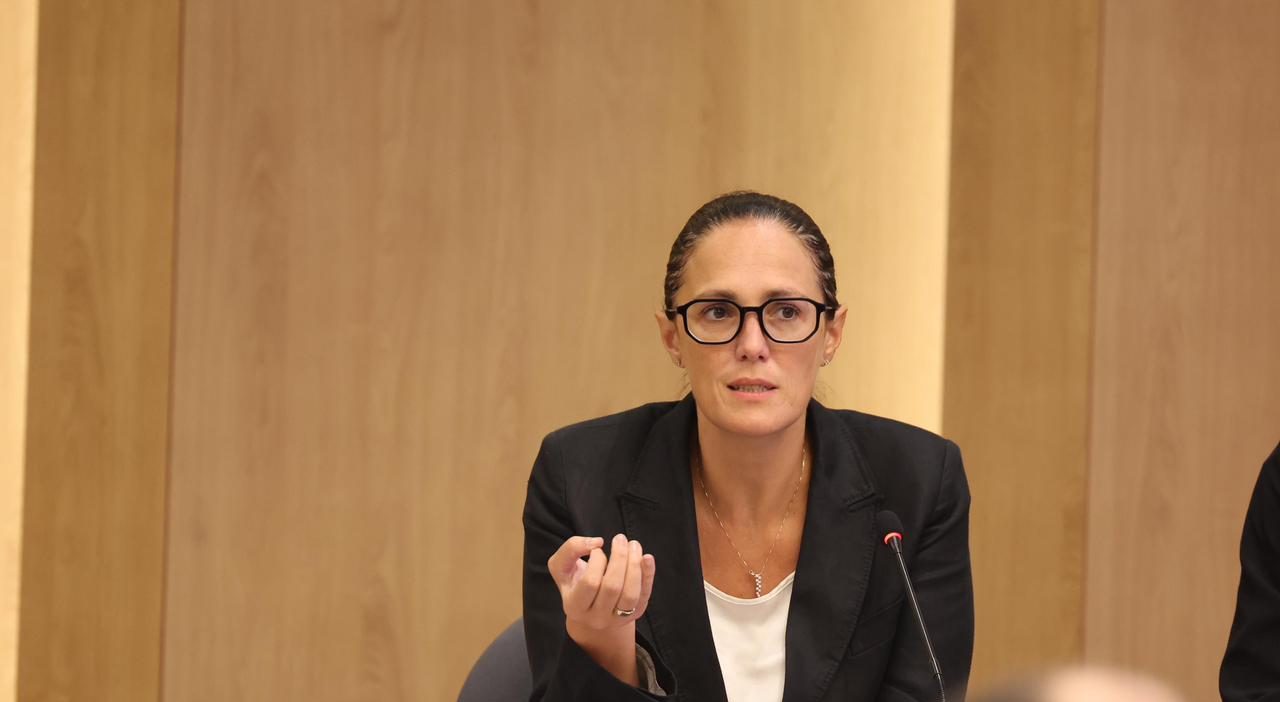


Minister Kumbaro Says Albania Improved Its PISA Results
During a parliamentary interpellation on the PISA 2025 findings, Education Minister Mirela Kumbaro stated that Albania had improved from the 2022 cycle, scoring 65 points higher in mathematics, 59 points higher in science, and 50 points higher in reading.
The minister’s data showed that Albanian pupils received 408 points in reading, 433 points in arithmetic, and 435 points in science. In science and math, Albania outperformed a number of the region’s nations, but in reading, it was in the middle of the Balkan nations. Albania also outperformed a number of other nations in the region in the evaluation of computer-based problem solving.
The technical remark that accompanied Albania’s results and PISA’s sampling technique were the subject of some of the interpellation. Minister Kumbaro clarified that the sample is chosen in accordance with guidelines set forth by the OECD and the international consortium that administers PISA in over 90 countries; it is not decided by national institutions or the Ministry of Education.
Schools chosen for the sample must have a minimum participation rate of 85% in accordance with PISA’s technical requirements. About 80% of Albanians attended school. Albania had a participation percentage of 97.37%, whereas the minimum required participation rate among students in the chosen institutions is 80%.
The minister emphasized that nearly every student chosen from the sampled schools participated in the evaluation, as seen by the 97.37% rate. The statistics showed that a large number of pupils who were asked to participate showed up, and the assessment included their results.
Compared to about 6,000 pupils in 2022, 5,959 Albanian students took part in PISA 2025. This suggests a generally comparable level of involvement between the two testing rounds, according to the minister. Additionally, she pointed out that from cycle to cycle, the demographic mix of pupils who have been tested has essentially not altered.
Speaking to schools that were left out of the sample, Minister Kumbaro emphasized that their exclusion from PISA was due to the statistical sampling process and did not imply that they were shut out of the educational system. She claims that international methods is used to choose the sample instead of Albanian institutions selecting schools.
The minister stated that the analysis also considers the possible impact of schools with fewer than 21 students not participating in the OECD’s technical note. Even in a negative case, the possible statistical bias is not anticipated to surpass 7.5% of one standard deviation, according to statistics she quoted from the paper.
The lowest confidence level for the scenario examined for the science outcome, if Albania received 435 points, would be 428 points, or seven points less. Minister Kumbaro emphasized that the 7.5% figure does not indicate a 7.5% drop in Albania’s score; rather, it alludes to possible statistical distortion.
She claims that the OECD published the findings along with the pertinent technical remark rather than canceling Albania’s scores or excluding the nation from PISA. She also mentioned the PISA 2012 cycle, in which the OECD found flaws in some of the data gathered via questionnaires without undermining the assessment’s overall findings for Albanian students.
Minister Kumbaro also described the steps being taken in the education sector in response to the PISA results. In collaboration with nine public institutions, over 30,000 educators have started a professional development cycle. This year, the new curriculum, which incorporates cybersecurity and STEM, has begun to be implemented in grades 1, 6, and 10. It is anticipated that the progressive curriculum modification will be finished by 2029. Infrastructure-wise, 39 new infrastructure projects have been approved for reconstruction, and 53 new schools opened at the start of this school year.
Albania is taking part in additional international evaluations in addition to PISA. The TIMSS preliminary phase on math skills for the same age group was finished last year, along with the TALIS survey for instructors and the PIRLS evaluation of reading skills among 10-year-old kids.
Minister Kumbaro concluded by emphasizing that Albania still has space to develop in reading, math, and science and pointing out that the PISA results should be viewed as motivation to carry out more educational reforms. Through events like the Albanian Language Competition, Science Festival, National Olympiads, theater festivals, and choral activities, she emphasized the need of encouraging reading and involving kids. In order to promote students’ interest in reading and cultural development, the Ministry of Education will also introduce the “Let’s Meet for a Book 2.0” project this year.