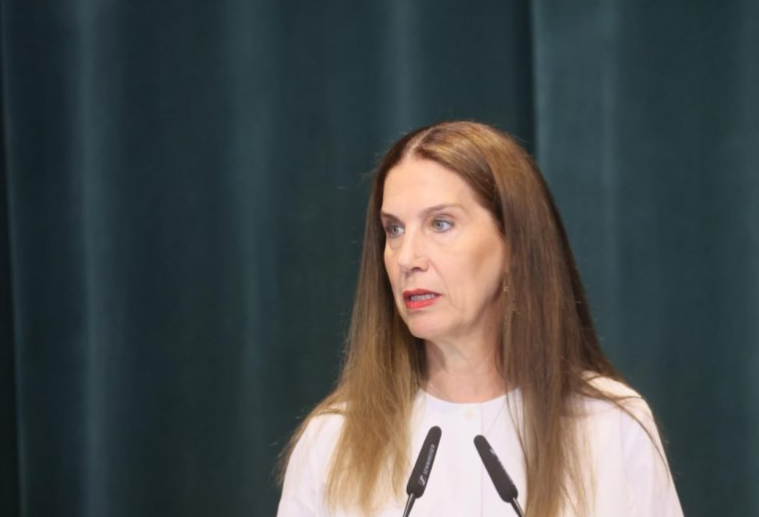


Minister Sala Says Increase in Medicines Budget and Modernization of Hospital and Oncology Services Are Key Priorities
Minister of Health and Social Protection Evis Sala reported on the current situation and priorities for 2026. She highlighted a deep reform of hospital services, an increased budget for medicines, and the transformation of the national oncology service.
In 2026, salaries in the healthcare system will increase by 2.5% for doctors and nurses. Seniority of up to 30 years is now recognized, which benefits doctors, pharmacists, nurses, laboratory technicians, and technical staff working in primary, secondary, and public health services.
According to Sala, 12 national hospitals have been granted managerial autonomy. By June 2026, the hospital network is expected to be fully mapped based on demographic shifts and performance indicators, such as bed occupancy rates and length of stay. An international comparative analysis of autonomy models is also being conducted, and the legal framework is being reviewed to improve financial and administrative management.
The medicines budget has increased by €15 million for 2026. The list of reimbursable medicines is expanding, and the methodology is being reviewed to ensure sustainable access to innovative treatments.
In the area of prevention, the cervical cancer screening program now offers HPV testing for the first time and has expanded the target age group to 35–55 years old. Current screening coverage is at approximately 45%. HPV vaccination has been expanded to include 13-year-old boys, in line with international recommendations. Meanwhile, hepatitis B vaccination coverage has reached 98%. The 2025 prevalence study among children aged six to seven showed zero prevalence, bringing the country closer to certification for the elimination of hepatitis B in the pediatric population. The minister stressed the need to increase measles, rubella, and mumps vaccination coverage.
In January 2026, there were 712,275 primary care visits and 13,627 home visits. In the field of social protection, 48,157 families received economic assistance in January 2026. Meanwhile, 77,445 people with disabilities received payments from the social assistance fund in November and December of 2025.
Reforming the National Oncology Service is one of the main priorities. A full analysis is being conducted at QSUNT and across the regional network. A plan has been drafted to establish the National Cancer Institute, which will function as a research and scientific center rather than merely a hospital. The Tumor Board has approved unified treatment protocols in line with the standards of the Istituto Nazionale dei Tumori di Milano, with which institutional twinning will be implemented. Six regional chemotherapy units will be upgraded to meet QSUNT standards in 2026, with six more to follow in 2027.
Another priority is digital reform in healthcare, with a focus on hospital systems and the integration of advanced technologies, including artificial intelligence.
The minister announced the continuation of international cooperation through institutional twinning with European institutions. This includes collaboration with the Public Health Institute in Rome and the World Health Organization. The goal is to ensure that Albania’s healthcare system meets European standards.
In the field of social welfare, a key priority is developing the care economy. Negotiations are underway with UN organizations and the World Bank to review and adapt care economy models with a focus on expanding social care services. The social fund has been disbursed, and work is underway to establish 14 new social services in 12 municipalities nationwide.
Finally, Law No. 11/2026, “On the Prevention of and Protection from Violence Against Women and Domestic Violence,” has been approved, strengthening the legal framework for protecting and empowering victims. Simultaneously, negotiations have begun with the World Health Organization to draft the necessary studies and agreements to establish a center for treating victims of gender-based digital violence in Albania with the intention of developing it into a regional center.
According to the minister, the 2026 priorities aim to modernize the hospital network, improve service quality, expand access to innovative treatments, and strengthen social protection in line with the European integration process.