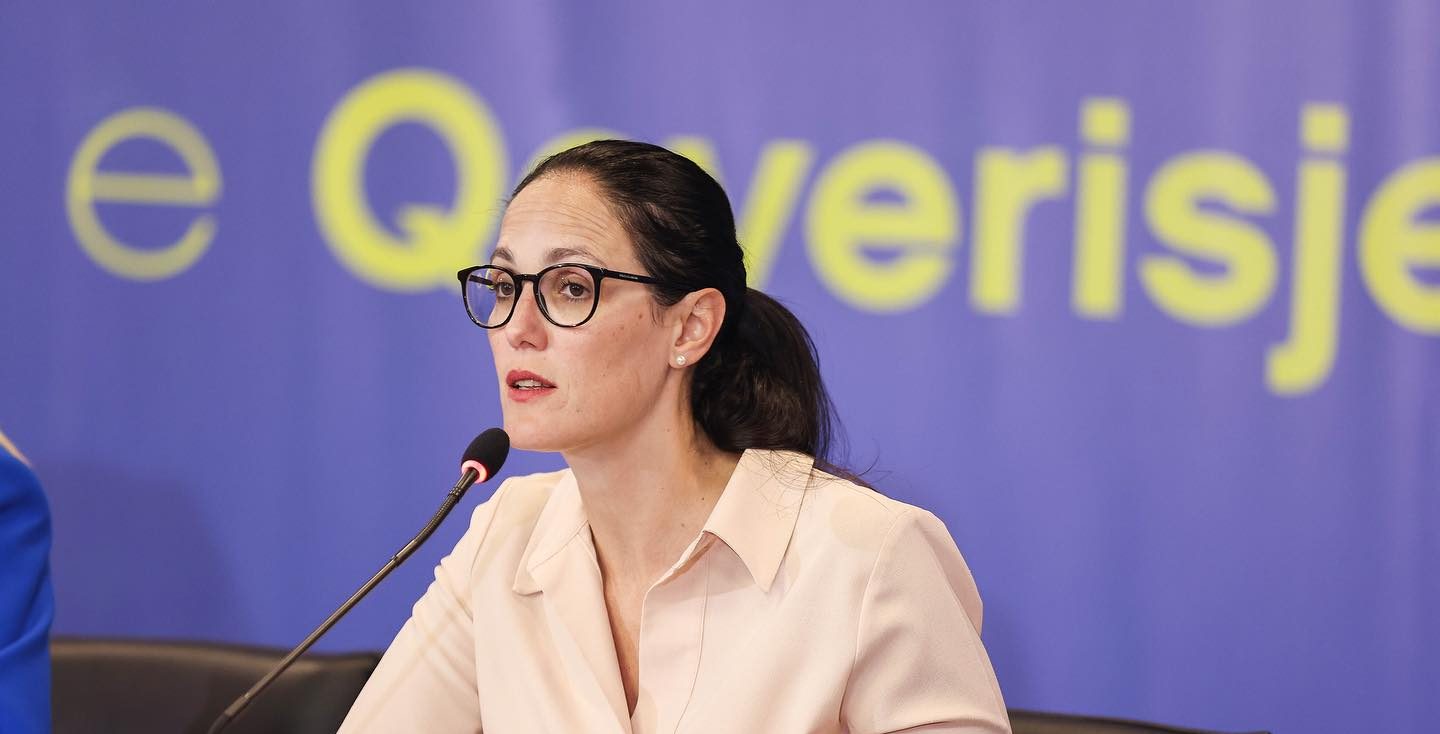


Minister Sala Says Oncology Services, Hospital System and Social Welfare Reforms in Focus for 2026
During a press conference, Minister of Health and Social Welfare Prof. Evis Sala presented the main priorities and challenges for 2026, describing the year as a period of deep reforms and strategic decision-making for Albania’s health and social protection systems.
One of the main priorities is the reform of oncology services, which has been identified as a national priority. A working group has been formed to establish the National Cancer Institute and the National Network for Tumor Diseases. This process involves a thorough evaluation of the current situation, including the distribution of cancer cases across regions, hospital capacities, and the necessary infrastructure, equipment, and medications. In collaboration with the National Cancer Institute of Milan, 38 unified treatment protocols have been approved. Chemotherapy capacities at the University Hospital Center “Mother Teresa” (QSUNT) have doubled, and six regional oncology treatment points are expected to be upgraded during the year. QSUNT has also performed the first breast reconstruction procedures with state-funded implants to support women undergoing mastectomy with immediate implantation.
As part of our cooperation with the International Atomic Energy Agency, we have installed a third radiotherapy accelerator that is currently undergoing testing before becoming operational. The software systems of the two existing accelerators have been upgraded, and medical staff are receiving training in interpreting PET scans. The installation of a new brachytherapy device is also expected this year. QSUNT has also approved the establishment of a Breast Unit, which will provide multidisciplinary treatment for patients with breast cancer. Meanwhile, the authorities are reviewing plans to reconstruct the Oncology Hospital building and create a dedicated space for clinical studies. This will enable access to innovative medicines at no additional cost to the system.
The budget for medicines is expected to increase by around 15 million euros in 2026. The strategy includes expanding the list of reimbursable medicines to include innovative therapies for oncology and hematology conditions, increasing the supply of existing medicines to avoid shortages, and revising the eligibility criteria for reimbursement for several oncological diseases. An institutional twinning process has also begun with the Milan Cancer Institute to transfer knowledge and strengthen professional capacities in cancer treatment.
Another major reform involves restructuring the hospital system. A multisectoral working group of domestic and international experts has been formed to develop the National Hospital Plan. Currently, a comprehensive mapping of the hospital system is underway, which includes an analysis of current capacities, geographical distribution of services, hospital performance, and human resources. The goal of the reform is to rationalize the hospital network, strengthen regional hospitals, and increase the managerial and financial autonomy of hospital institutions. Currently, twelve hospitals in the country operate with managerial autonomy, including the recently added “Shefqet Ndroqi” Regional Hospital Center of Tirana.
In public health, the priority remains strengthening screening and vaccination programs. The cervical cancer screening program has expanded to include women aged 35–55, and the HPV vaccination program has extended to 13-year-old boys, aligning with international recommendations. Hepatitis B vaccination coverage for the full three-dose schedule has reached 98%, and a 2025 study of children aged 6–7 identified no positive cases, bringing Albania closer to eliminating hepatitis B in the pediatric population. The authorities also aim to expand screening programs and increase vaccination coverage for measles, rubella, and mumps.
The ministry is preparing a plan of health measures for the summer tourist season. Last year, 36 seasonal health centers conducted over 83,000 medical visits, approximately 25,000 of which were for foreign tourists. The Trauma Hospital treated 683 foreign citizens, a 15% increase from 2024. Authorities say this reflects growing confidence in Albania’s healthcare services.
Meanwhile, the digital modernization of the healthcare system has begun with the mapping of existing platforms, aiming to achieve full system harmonization and gradually integrate artificial intelligence into healthcare management and service delivery.
In the field of social welfare, a key priority is developing the care economy and transitioning from passive assistance to economically empowering vulnerable groups. The program aims to integrate social protection beneficiaries into the economy by providing care services for at-risk children, the elderly, persons with disabilities, and women in need. This encourages employment and economic independence.
The Social Fund is expected to create 14 new social services by 2026, which will serve around 2,500 beneficiaries. These services will support abandoned elderly individuals, children in need, persons with disabilities, and victims of violence or trafficking. These services will be implemented in 12 municipalities. In Tirana, two specialized structures are planned: a regional center for young people with autism spectrum disorders and an emergency shelter for children living on the streets or returning from migration.
As part of the European integration process, the Ministry has met several interim standards under Chapters 19, 23, and 24 of the negotiations with the European Union. Key developments include the approval of the gender equality law, which expands obligations for public institutions and the private sector and recognizes the care economy as an economic contribution; the law on preventing and protecting against violence against women and domestic violence; and the alternative care law, which aims to transform residential institutions and develop a foster family system for children without parental care.
According to Minister Sala, 2026 will be a pivotal year for the health and social welfare system. It will be a time of fundamental reforms aimed at establishing modern oncology services, a more efficient hospital system, digital healthcare development, robust social welfare policies, and a legal framework aligned with European standards.