

Minister Sala Says Reconstruction of the Trauma Hospital Continues Without Interrupting Services, over 19,000 Emergency Patients Treated During the First Four Months of 2026
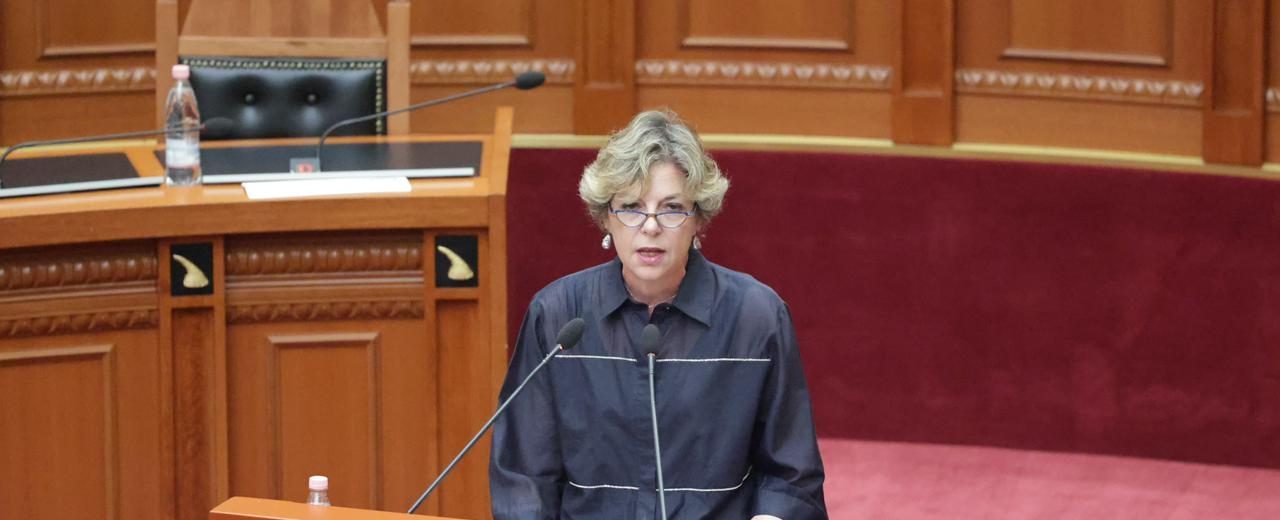
The University Hospital of Trauma is operating normally during the reconstruction and modernization process, and emergency and key services are active for citizens. During a parliamentary inquiry, Minister of Health and Social Welfare Evis Sala emphasized that the 759 million Lek investment aims to improve safety standards, infrastructure, and patient care.
According to Sala, construction began in September 2025 and is being carried out in phases to ensure continuity of services. Currently, work is underway on the external infrastructure and the central operating block. Meanwhile, the Emergency Operating Block continues to perform the necessary trauma and orthopedic interventions daily. As the hospital that handles the country’s most severe emergencies, the University Hospital of Trauma has not closed, and no citizen has been left without services due to the reconstruction.
Data presented during the interpellation showed that, during the first four months of 2026 alone, 19,702 patients were admitted to the Emergency Admission Service at the University Hospital of Trauma—455 more than during the same period in 2025. During this time, 932 emergency surgeries were performed, which is 38 more than the previous year, reflecting the hospital’s continuous activity throughout the reconstruction period.
Regarding surgical activity, it was noted that infrastructure interventions will temporarily affect some facilities, though services will continue through the reorganization of hospital capacities. The only activity that has been temporarily transferred is amputations for patients with diabetic foot conditions. These procedures are currently being carried out at the University Hospital Center “Mother Teresa,” while all other services continue uninterrupted.
Regarding waiting lists for orthopedic procedures and endoprosthetic surgeries, Minister Sala stated that, thanks to increased funding and improved organization of hospital resources, the gradual resumption of long-delayed procedures has begun. The number of patients on waiting lists has decreased to approximately 570, down from nearly 1,000 in previous years. The average waiting time has also decreased, dropping from nearly six years to around 13 months. Patient registrations are carried out through the hospital’s electronic system, ensuring transparency and treatment according to the established order, according to the minister. Currently, there are no reported shortages of orthopedic materials or prostheses for procedures performed at the University Hospital of Trauma. Increased funding has enabled coverage of emergency needs and the gradual continuation of scheduled operations.
During the interpellation, it was emphasized that efforts are underway to strengthen regional trauma and orthopedic capacities gradually, with the aim of decentralizing services and making them more accessible to citizens. As part of this initiative, work has begun to upgrade the Municipal Hospital of Mirdita into a regional center for trauma, orthopedics, and post-traumatic rehabilitation in collaboration with the University Hospital of Trauma. The minister stated that the project aims to create a “Northern Trauma Hub,” which will enable faster treatment of traumatic emergencies in the northern part of the country, reduce transfers to Tirana, and strengthen regional surgical capacities.