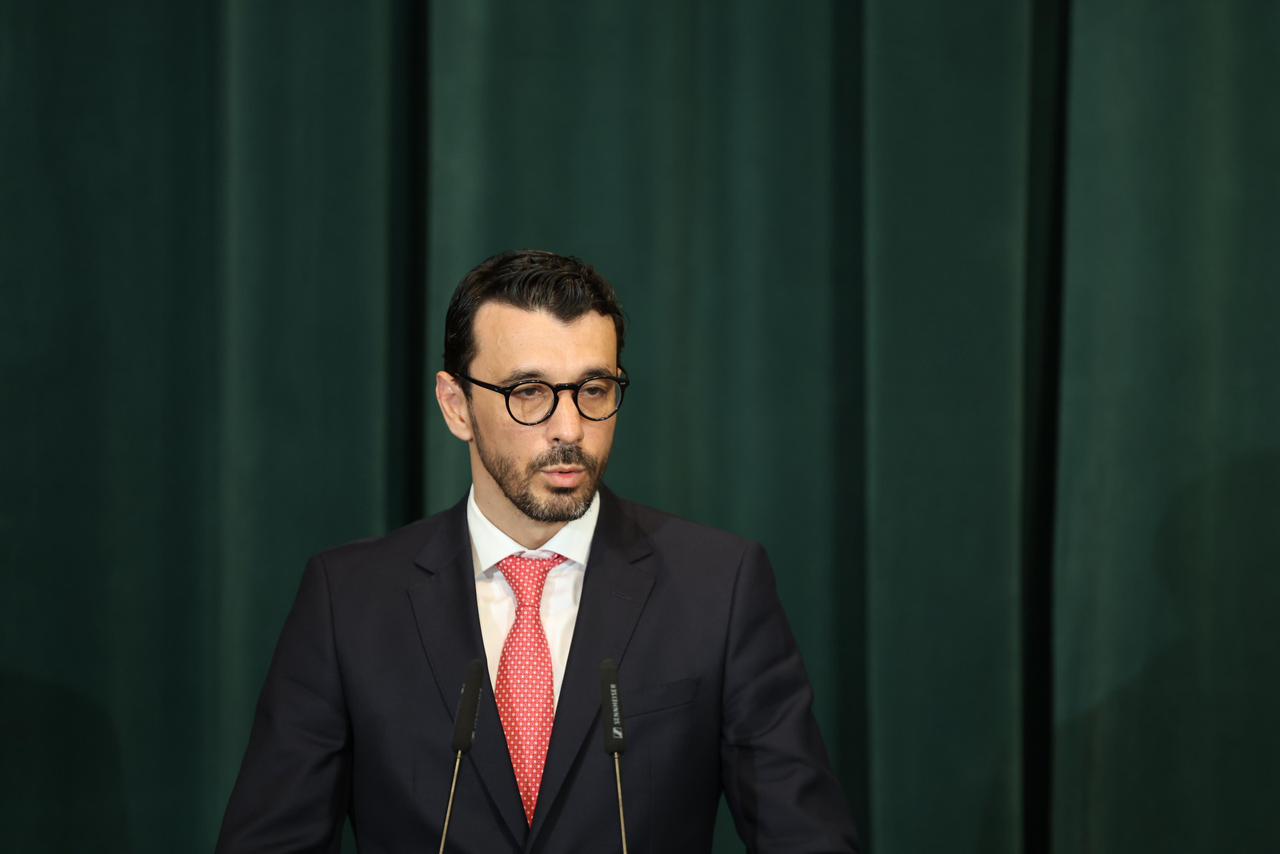


Minister Spahiu Announces PET Scan Introduction in Early 2027 and Oncology Institute Opening in January
The Oncology Institute will start operations in January, and the PET Scan service is anticipated to be accessible in early 2027, according to Minister of Health and Social Welfare Klodiana Spahiu, who made this announcement during a parliamentary interpellation.
Speaking about oncology services, Minister Spahiu said that comprehensive protocols have been developed for tracking patients who have just received a cancer diagnosis and those who need follow-up treatment following surgery.
The minister claims that 38 standardized cancer treatment protocols have been developed thanks to collaboration between the Milan Cancer Institute and the University Hospital Center “Mother Teresa” (QSUT). Multidisciplinary teams made up of oncologists, surgeons, radiotherapists, radiologists, pathologists, and other professionals assess oncology cases as needed.
The minister also discussed basic medical examinations, sterilization, and hemodialysis, emphasizing the advancement of these services and the bolstering of public sector capabilities. The Health Integrated Services Operator has been in charge of the sterilizing service since April, and on September 11th, the state started to administer basic medical examinations. The goal of moving these services to public administration is to increase the state’s ability to deliver them directly. The goal is to guaranty that patients receive continuous, safe, and high-quality care with transparent institutional accountability.
Spahiu highlighted that the Health Integrated Services Operator is a state-owned business and that changing its name from OSHIS to OSHISH does not mean creating a new organization. While policymaking, financing, regulation, procurement, and oversight continue to be distinct functions allocated to the appropriate authorities, the operator is in charge of the operational management of particular services.
In reference to hemodialysis, Minister Spahiu highlighted that the service’s expansion occurred during a period when the public sector lacked adequate infrastructure, equipment, human resources, and technical competence. Albania had 284 patients per million people in 2011, and the service was offered in a number of provincial hospitals in 2012. To bring hemodialysis services closer to patients, a public-private partnership approach was introduced in 2015 for five regional hospitals in Shkodër, Lezhë, Korçë, Vlorë, and Elbasan.
In this regard, expenditures over the years have aimed to increase public-sector capabilities and give the state direct control over some healthcare services.