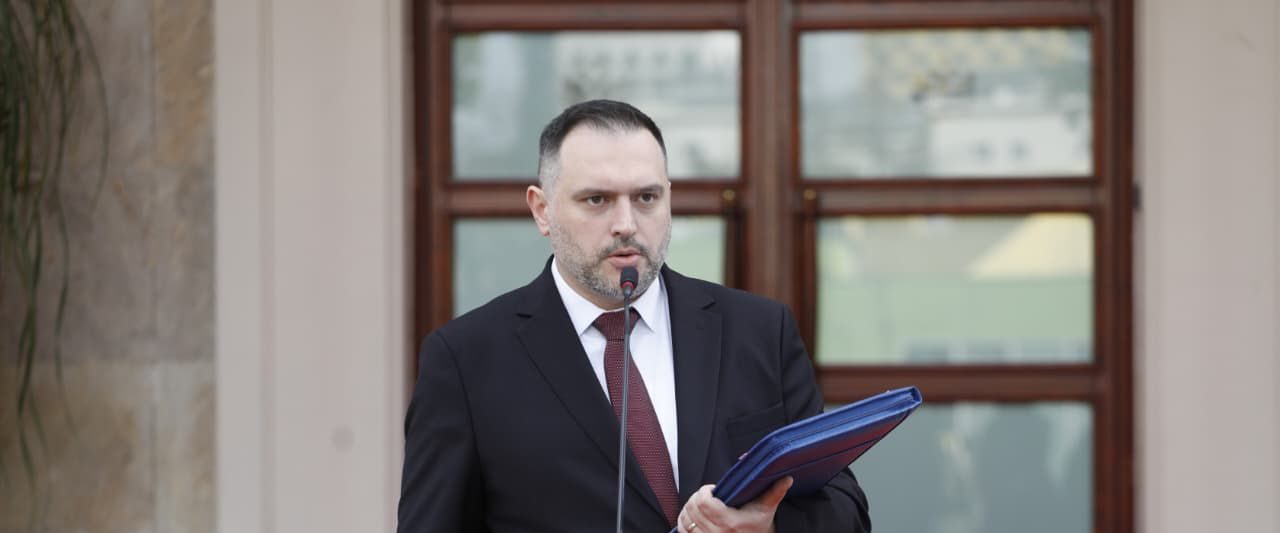


Minister Malaj Presents 2026 Financial Indicators Highlighting Economic Growth and Higher Wages
At a media conference, Finance Minister Petrit Malaj presented the financial and economic indicators for the first half of 2026, emphasizing that the Albanian economy is still growing at a steady pace, with increased budget revenues, lower unemployment, higher wages, and further progress in economic formalization.
According to the figures presented, Albania’s GDP expanded by 3.7% in the first quarter of the year, outpacing the average growth rate of the European Union and Western Balkans. Average inflation was 2.7%, in line with the Bank of Albania’s target, while unemployment fell to a record low of 8.4%.
Minister Malaj revealed that budget revenues for the January-June period were ALL 410.6 billion, a 12.2% rise from the same time in 2025. Meanwhile, public spending rose by 7.5%, while capital investments surged by 10.2%, indicating that public projects are progressing.
According to the minister, the job market is improving, with the average wage reaching €935 in the first quarter of the year, up from €831 a year before. Wage increases was observed in both the public and commercial sectors, and the number of legally declared employees in higher pay categories increased as a result of economic formalization.
The conference also noted that company turnover climbed by 7% in the first half of 2026 compared to the previous year, while the number of active enterprises increased by 6% to 148,270. Foreign direct investment remained positive, while loans to the economy increased by 11.1% in the first five months of the year compared to the same period last year.
Minister Malaj also discussed the status of numerous policies outlined in the 2026 Fiscal Package. So far, the property reassessment procedure has yielded ALL 5 billion in revenue, while farmers have submitted 2,397 applications for the 10% VAT compensation plan for agriculture. Furthermore, the DIVA plan has reimbursed 39,965 individuals for a total of ALL 597.8 million.
During the conference, the minister stressed that one of the top tasks for 2026 is to further the European integration process by fully aligning tax and customs legislation with European Union directives and criteria. The minister expects customs legislation to be harmonized by September, while tax legislation will be aligned by 2026, along with the expansion of digital systems and the use of artificial intelligence in risk management.